

ICONLOOP and Jeju Province's Blockchain-Based Tourism Quarantine System Jeju Safe Code Passes 340,000 Users
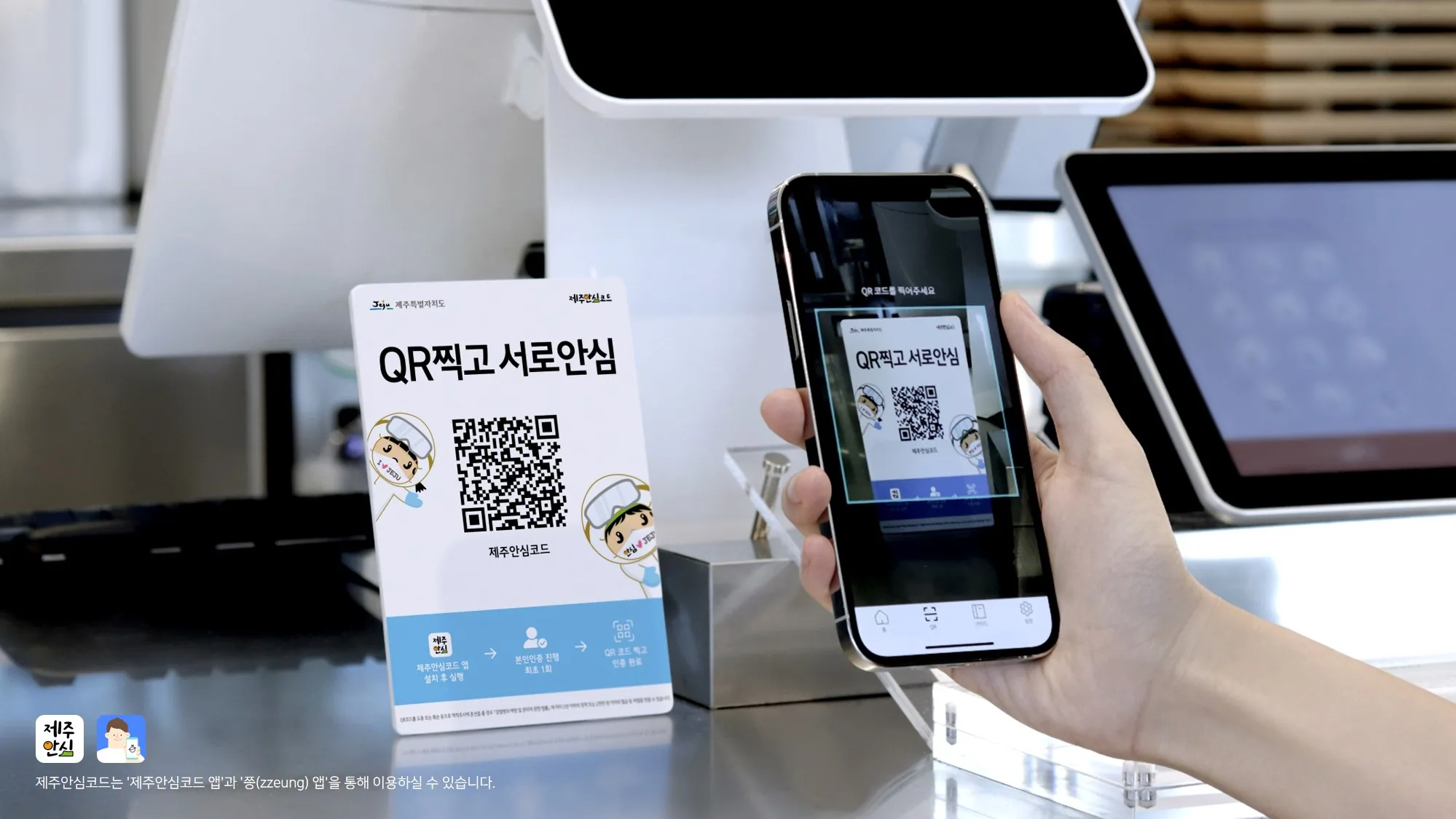
Jeju Safe Code is a system jointly developed by ICONLOOP and the Jeju Special Self-Governing Province under a public-private cooperation agreement. It was built to create a sustainable tourism quarantine system optimized for tourist destinations, addressing the quarantine gaps and the difficulty of tracing contacts that can arise from Jeju's regional characteristics — a heavy inflow of outside visitors and high visit rates at crowded venues. ICONLOOP and the province ran a pilot of the system last August, centered on public institutions and businesses near the provincial government offices, and moved to full operation from the end of the year.
Just over two months into full operation, more than 40,000 businesses across the island are using Jeju Safe Code, and the number of users has passed 340,000. Total uses have reached 2 million. Usage is notably high at venues such as ordinary restaurants and cafés that are not classified as high-risk facilities but see many visitors, and the system is credited with playing a significant part in strengthening the island's everyday quarantine framework.
An ICONLOOP representative pointed to convenient usability, along with the interest and participation of residents and tourists, as the biggest reasons Jeju Safe Code spread so quickly in such a short time. Unlike the conventional approach of generating a QR code on the user's phone, Jeju Safe Code allows fast, simple entry authentication by simply scanning the QR code posted at the venue with a phone. The Jeju Safe Code app can be used easily without a separate sign-up, and business owners can use it by posting a printed QR code with no dedicated terminal or app installation required — convenient and low-burden.
Another strength of the system is that visitor information cannot be forged or altered, thanks to blockchain technology. When Jeju Safe Code is used, personal identity information and visit records are encrypted and stored in distributed form, and this entry authentication data is used solely for epidemiological investigation of confirmed cases.
ICONLOOP continues to advance Jeju Safe Code with feature updates that improve convenience. Users can currently check their own authentication history directly in the Jeju Safe Code app, and a GPS function has been added to prevent tampering with movement records more definitively. ICONLOOP plans to keep supporting a more robust everyday quarantine framework through a range of feature updates aimed at improving user convenience.
"It is gratifying to see Jeju Safe Code, which applies ICONLOOP's blockchain technology, establishing itself as a service that many tourists and Jeju residents can use easily and simply," said ICONLOOP CEO JH Kim. "We will not stop here — we will do our utmost to advance the system so that a tourism and everyday quarantine framework both Jeju residents and tourists can rely on is put firmly in place."
Businesses can register for Jeju Safe Code at the COVID-19 situation room on the Jeju provincial government website (https://www.jeju.go.kr/corona19.jsp). Users visiting a facility where Jeju Safe Code is installed can search for "Jeju Safe Code" on Google Play (Android) or the App Store (iOS) and install the app.
The system can also be used through Zzeung (https://zzeung.id), ICONLOOP's DID identity verification app. Scanning the QR code posted at a venue with the camera in the Zzeung app issues a Jeju Safe Code based on DID, which is stored on the user's phone, allowing entry authentication without exposing personal data when visiting a business. Zzeung can likewise be searched for and installed from Google Play or the App Store.
###